BLOG & ARTICLES
Thoughts on journaling, memory and wellbeing.
Inspiration, guides and much more about living, traveling and keeping a diary.
How to Preserve an Old Diary Without Losing the Handwriting
Turn Your Old Diaries Into Digital Memories
A digital copy should let you find the words years from now and still see the hand that wrote them.
To preserve an old diary, keep two versions of each page together: a clear image of the original and a digital transcription you can read and search. The image holds the handwriting, crossings-out and small marks that make the page personal. The text helps you find a name, a place or an ordinary Tuesday without turning every page again.
That matters whether the notebook is yours or belonged to someone you love. Your own diary can bring back a version of yourself you had almost forgotten. A grandmother's may be one of the few places you can still hear her describe a day in her own words. Either way, I would want to keep more than a clean block of typed text. Our earlier story about a diary kept for forty years is a reminder of how much can live in a stack of notebooks.
The handwriting is part of the story
An old diary page carries things a transcription cannot. You can see where the writer ran out of space, changed a word, pressed harder, or squeezed a final sentence into the margin. Even the date at the top of the page tells you something when it was written in a hurry.
This is why I would never throw away the photograph after the words have been recognized. Text recognition is useful, but it can be wrong, especially with faded ink or unfamiliar handwriting. The page image is the original record. The typed words are a way into it.
There is also a lovely difference between reading a sentence and seeing it in someone's hand. If the diary was your grandmother's, that handwriting may be as familiar as her voice. If it was yours, it might take you straight back to the room where you wrote it.
Imagine being able to search every diary you've ever written for the word "happy" and read every entry where you used it.
Start with one page, not a lifetime of notebooks
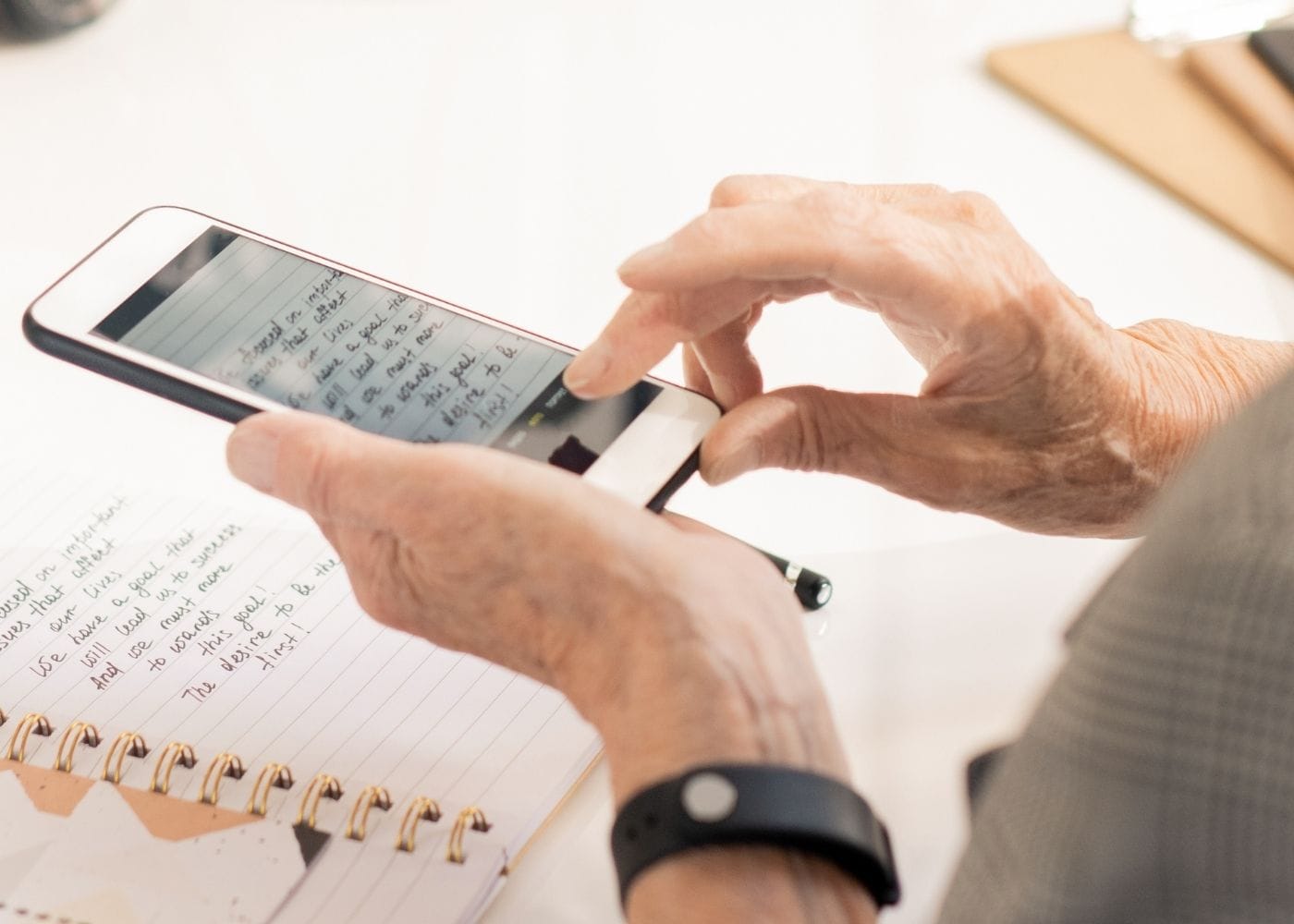
A shelf of old diaries can look like a project you will never finish. Begin with one page you would be sad to lose. It could be the day you moved, an entry from a family holiday, or a completely ordinary date that makes you stop when you read it.
Choose a place with even light and lay the page as flat as it will comfortably go. Hold the phone steady and keep the edges in view. Do not force an old binding open just to get a perfect image. A little curve at the edge of the photograph is better than damaging the book.

Keep this moment.
Write one line in YearDiary today and read it again on this day next year.
Keep the page and the words together in YearDiary
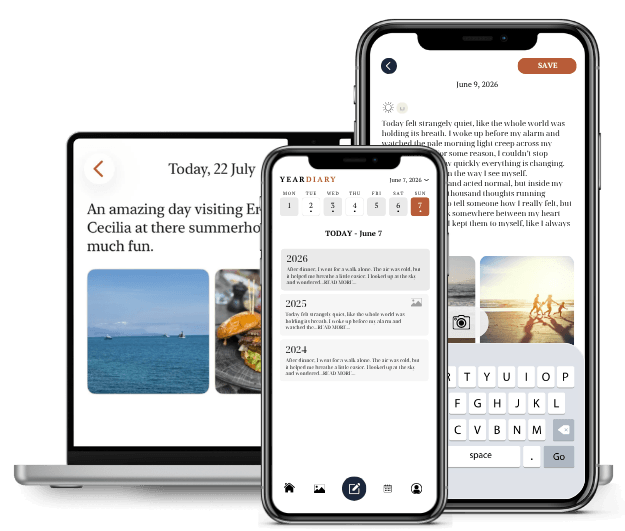
In YearDiary, open the entry where you want to keep the page and choose Scan text. Photograph the page, then read the recognized words on the review screen. You can correct them before adding them to the entry. Leave the photo selected if you want the original page attached alongside the text.
That last choice is the important one. The image lets you see the handwriting. The editable text gives the entry words you can search and read without deciphering the page from scratch each time. YearDiary's text recognition runs on your device. Your entries are kept on the device and can sync through your personal iCloud.
Scan text is a Premium feature. If you are scanning a long diary, work a page at a time and check each result before moving on. An old page is worth a few extra seconds of care.
If the entry's original date is easy to reach in YearDiary, use it. For a much older diary, save the page on the day you scan it and write the original date clearly at the top of the entry. If you know only a month or a year, record that rather than inventing a day. That way, a future reader can tell the difference between the page's date and the day you saved it.
When the diary belongs to someone else
Old diaries can be intimate in ways photographs rarely are. If the writer is alive, ask before you scan or share their pages. If they are no longer here, you may still want to think about which entries remain private and which you would feel comfortable showing the family.
Preserving a page does not require publishing it. You can keep the image and text in a private journal while you decide. That gives you time to read with care and to talk with relatives if the diary includes their stories, too.
For some families, the next step will be a book. For others, the private archive is enough. Our article on turning old memories into a book is there if you want to make something to share later.
A page you can return to
The original notebook still deserves a safe place away from damp, heat and bright light. Keep another set of the page photographs outside the app as well. Scanning gives the words another way to survive; it does not make the paper disposable.
What changes is access. A line written years ago no longer has to wait for the day you happen to open the right book. You can find the words, see the page, and remember the person who wrote them. That is the kind of preservation I care about: keeping the writing close enough to read, without losing the hand behind it.
Start with one page
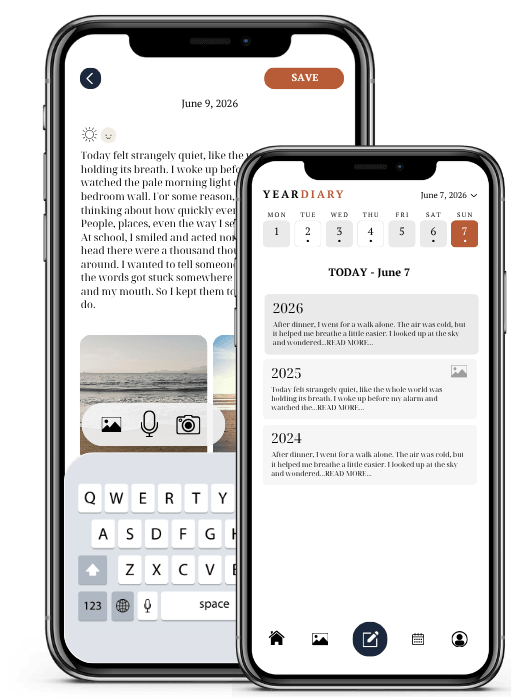
Download YearDiary and try it with a page you do not want to lose. With Scan text in YearDiary Premium, you can review the recognized words and keep the original page image beside them in the same entry.
A whole notebook may take time. There is no need to finish it in a weekend. Save a few pages when you can; each one is another piece of the story you can return to.
Keep the handwriting. Find the words. Come back to both.
Frequently asked questions
Yes. With Premium, Scan text shows the recognized words for review and lets you keep the captured page as an image alongside the editable text. Check the result before adding it to the entry.
No. Clear writing in good light works better than faded or hurried writing, and names are easy to misread. Keep the page image and correct the transcription where you can rather than treating it as an exact copy.
You can, but you do not have to start there. Save one meaningful page first. If you decide to digitize the whole collection, keep the pages in order, label the writer and dates, and maintain another backup outside the app.
THE LASTEST POSTS
Thoughts on journaling, travling and life.
Inspiration, guides and much more about living, traveling and writing diary.
YEARDIARY
©2026. All rights reserved.
Powered by connection, clarity, and community.